 Made in Quebec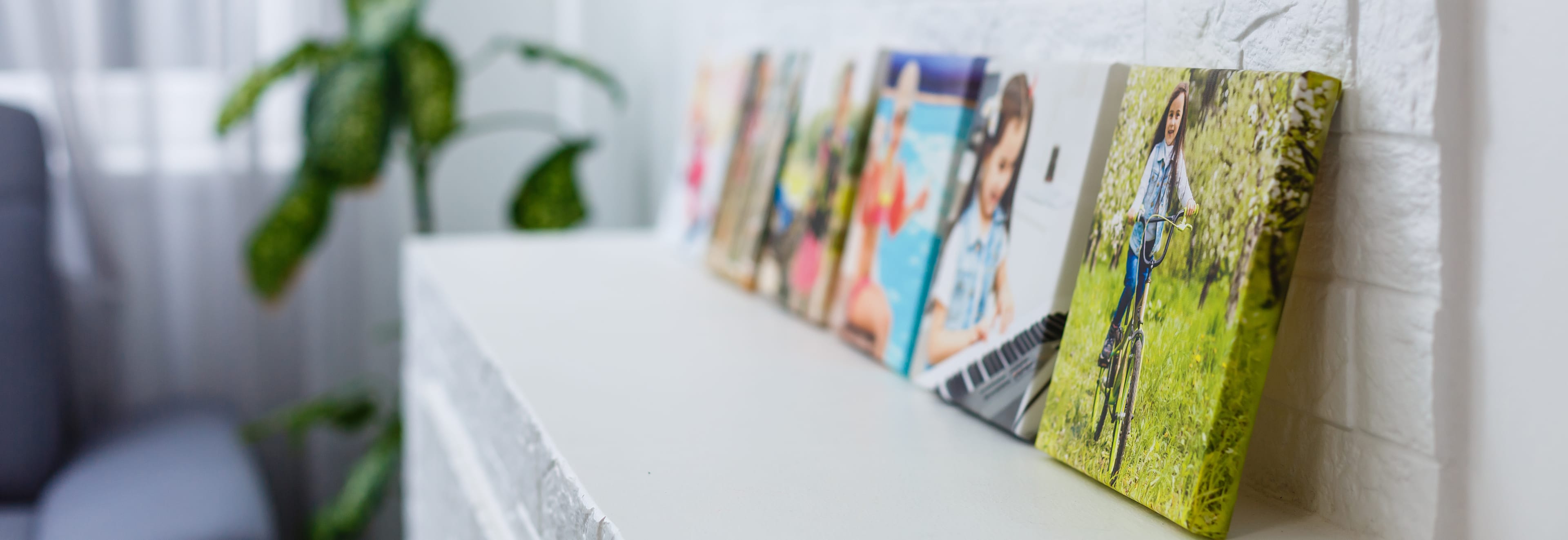
Canvas Wall Art
Wall art made from your photographs, not someone else's stock library.
Printed, stretched and finished in Quebec.
📦 Order today, get it byFri, Oct 30 - Fri, Nov 13
Building a wall around your own images
Mass-produced wall art is designed to be inoffensive in any room, which is exactly why it rarely holds anyone's attention. Photographs you took have the opposite quality: they mean something specific, and they are the only copy in existence.
If you are assembling a gallery wall, the usual approach is one larger anchor piece with two or three smaller canvases arranged around it, keeping 5 to 8 cm of spacing throughout. A 24x36 anchor with a pair of 16x20 canvases is a reliable starting configuration.
Consistency matters more than matching. Canvases printed in the same run share the same colour handling, so a set ordered together will hang as a group rather than looking like three separate purchases.
Hand-stretched in Quebec
Tensioned by hand over kiln-dried solid wood so the surface stays flat for years.
Matte, glare-free surface
No glass and no gloss, so the image stays readable under lamps and daylight alike.
Ready to hang on arrival
Hardware fitted before it leaves the studio. Nothing to assemble, no framing shop visit.
Gallery wall basics
- Pick an anchor
- One larger canvas — usually 24x36 — sets the centre of gravity for the arrangement.
- Keep spacing even
- 5 to 8 cm between canvases reads as deliberate. Uneven gaps read as accidental.
- Order as a set
- Same print run means consistent colour across every piece on the wall.
Frequently asked questions
Do you sell ready-made wall art designs?
No. Everything we print is made from a file you upload, so every canvas is one of one.
How high should wall art hang?
Centre the piece at about 145 cm from the floor — standard gallery eye level — unless it sits above furniture.
Can I mix sizes on one wall?
Yes, and it usually looks better than a grid of identical sizes. Anchor with the largest piece.
Is canvas better than framed paper?
For photographs it usually is — no glass means no glare, and the matte surface suits skin tones and texture.